Forearm Tattoo Ideas With a Clear Subject
Forearm tattoo ideas need to fit the usable space between the wrist and elbow. I plan the subject, direction and detail for your arm, including any space you want to leave for future work.
Written by MillyTattoo Artist & Studio OwnerMilly Tattoo, Birr, Co. Offaly15+ Years1500+ Tattoos
How I plan a forearm tattoo from your references
Table of Contents
Decide what the tattoo is about
Before choosing a style, decide what the drawing must show. It might be an animal, a piece of real handwriting, the look in a pair of eyes or the open gaps in an Ornamental design.
My forearm tattoo portfolio shows real examples of size and position. For pain and preparation, see the tattoo pain chart.
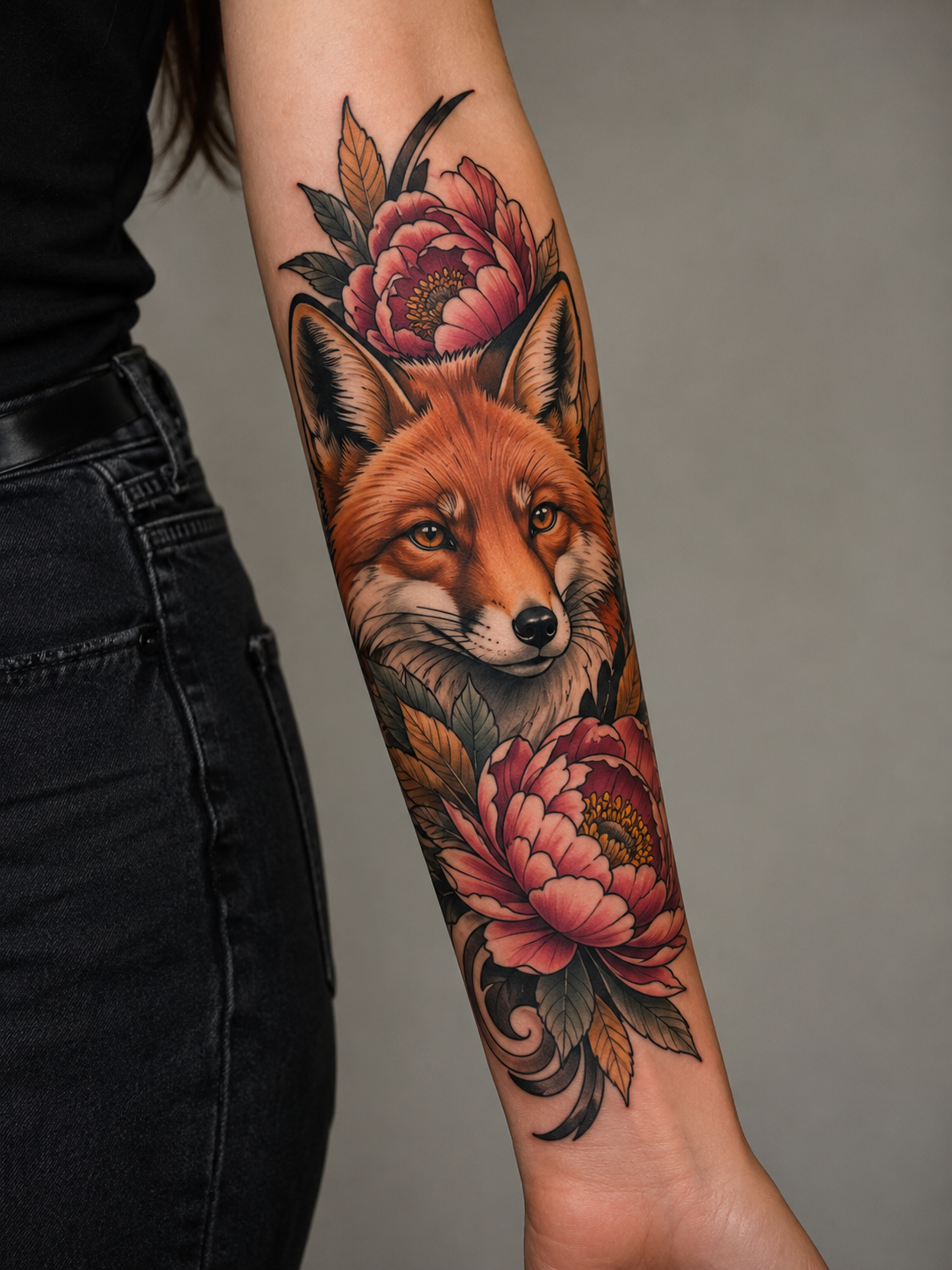
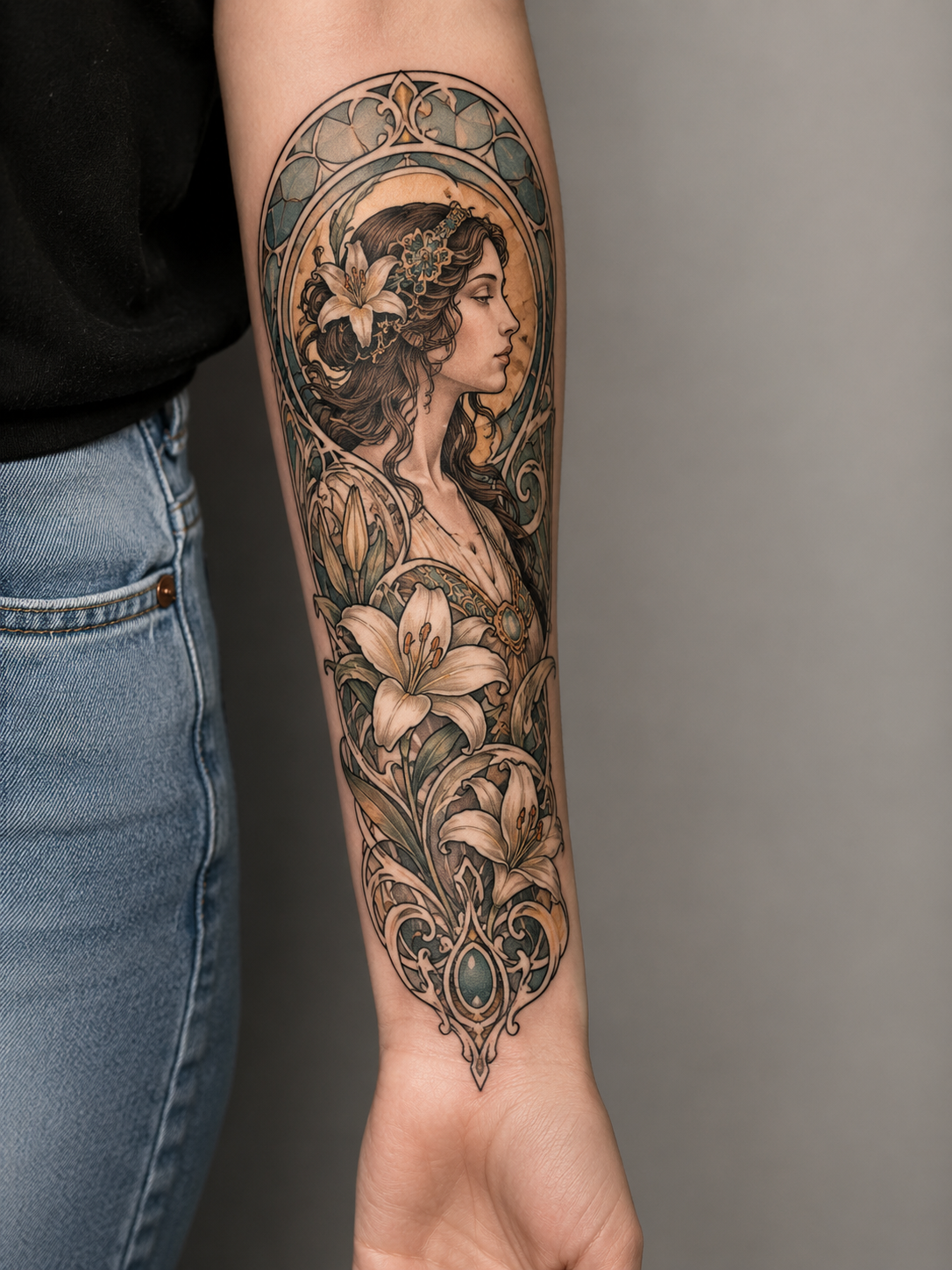
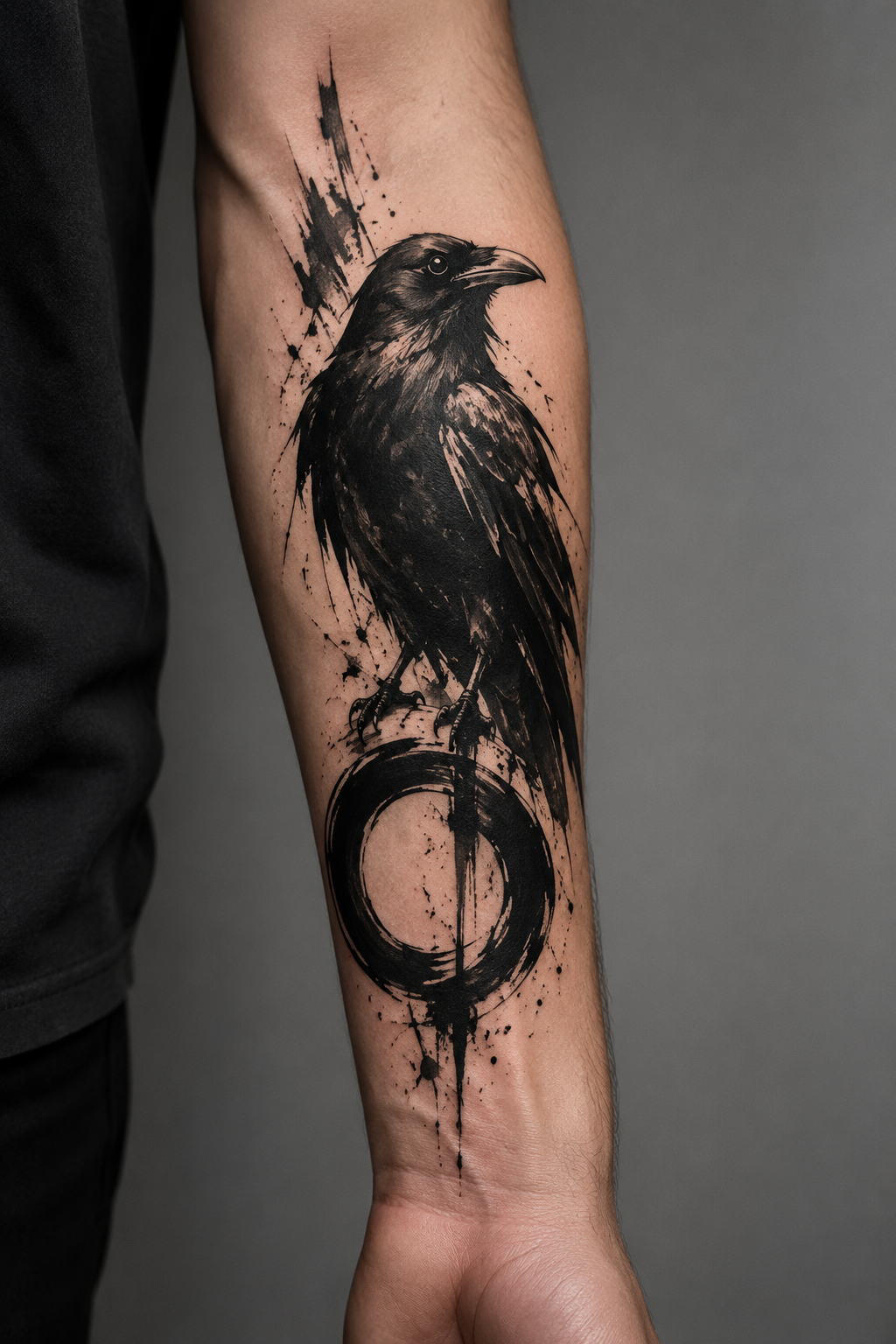
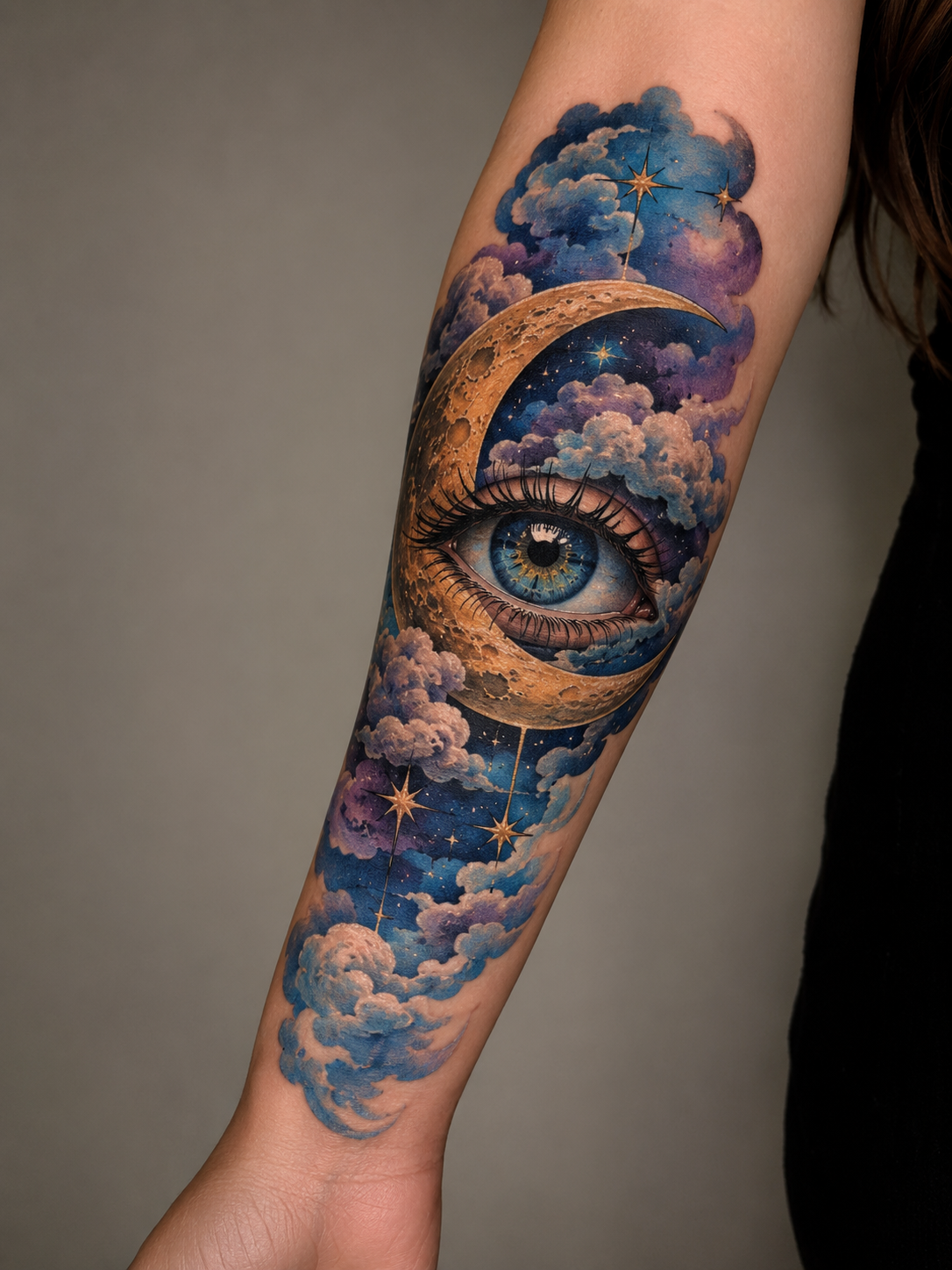
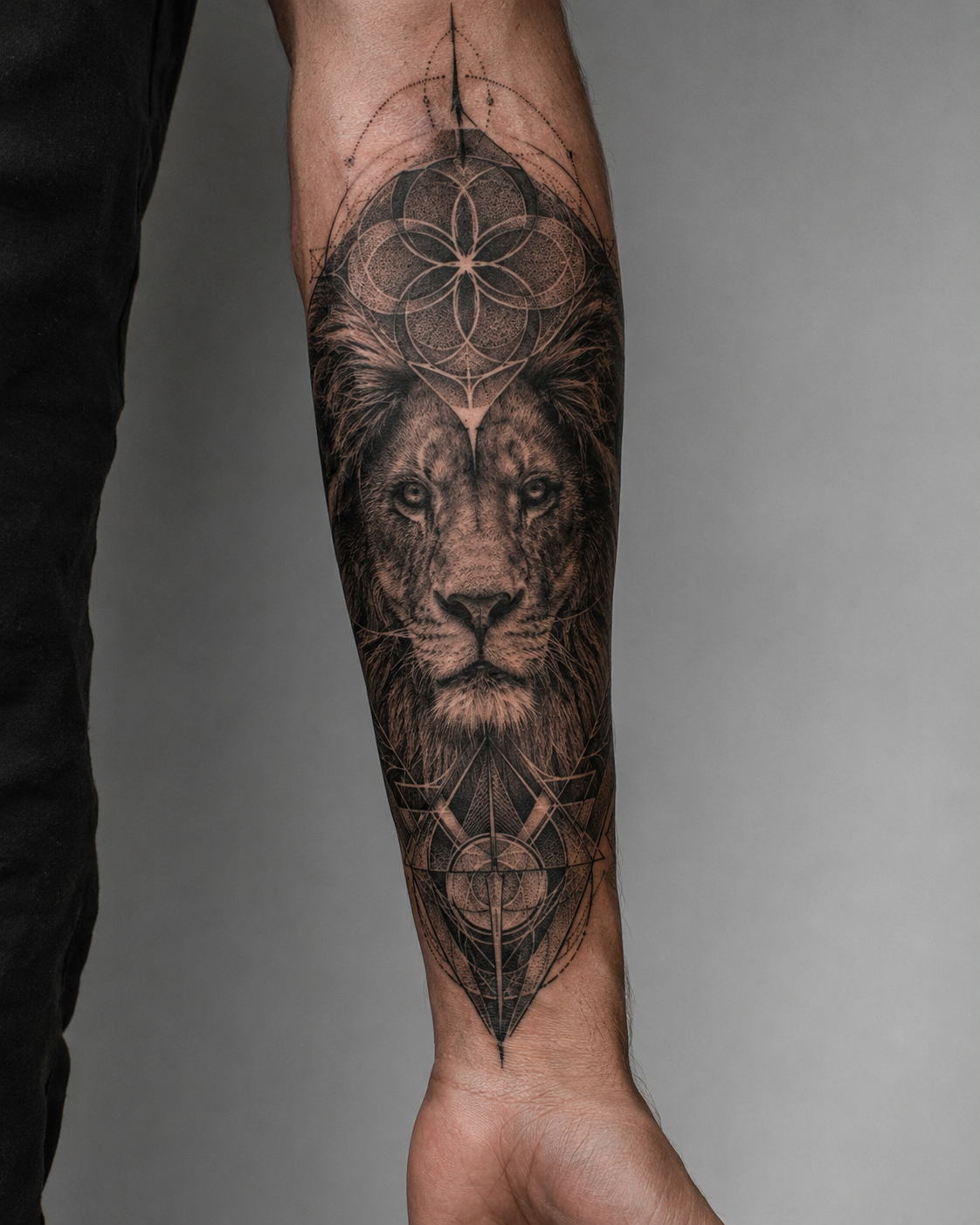
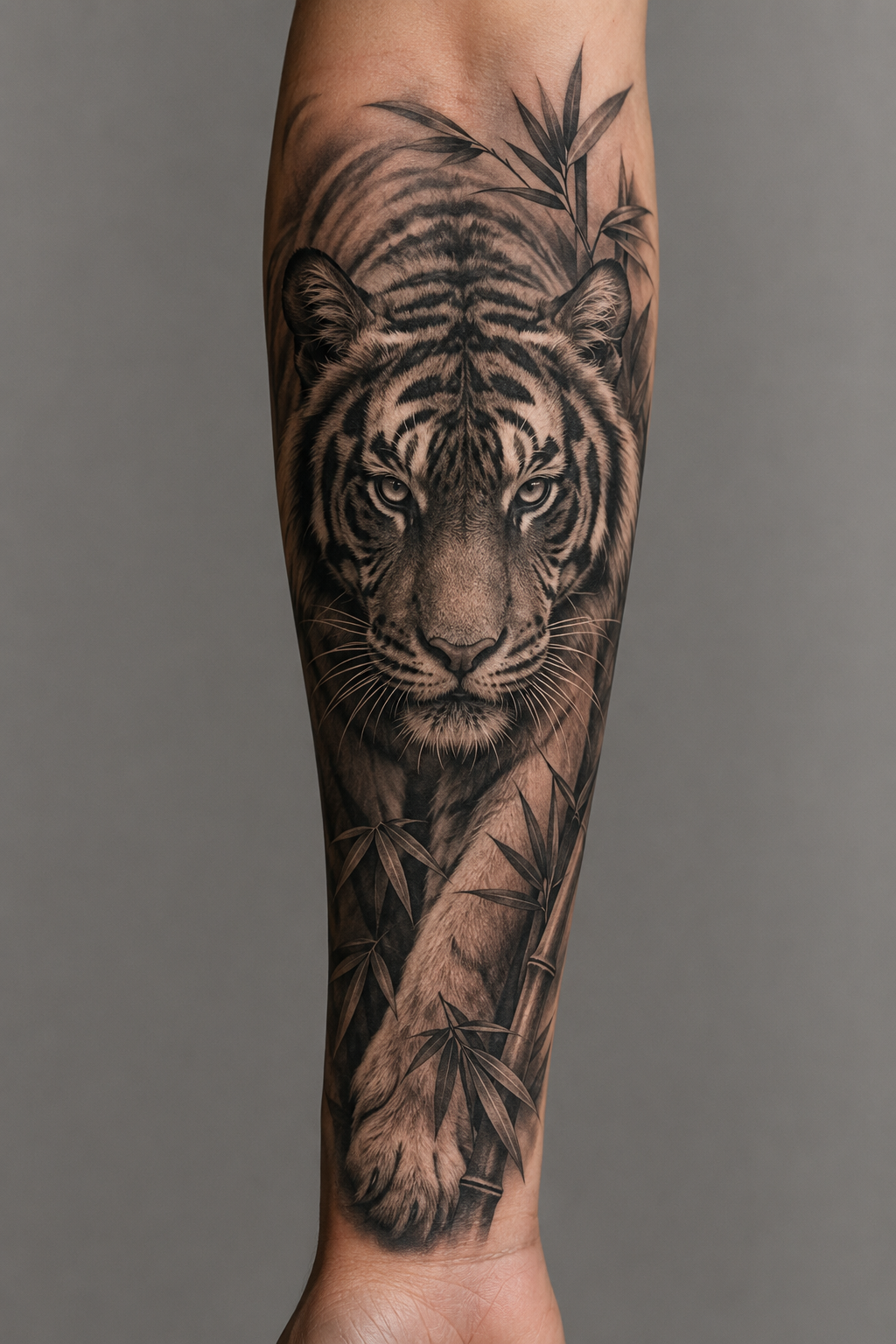
The paired images below are visual concepts, not work from my portfolio. The linked portfolio pages show my real completed work.
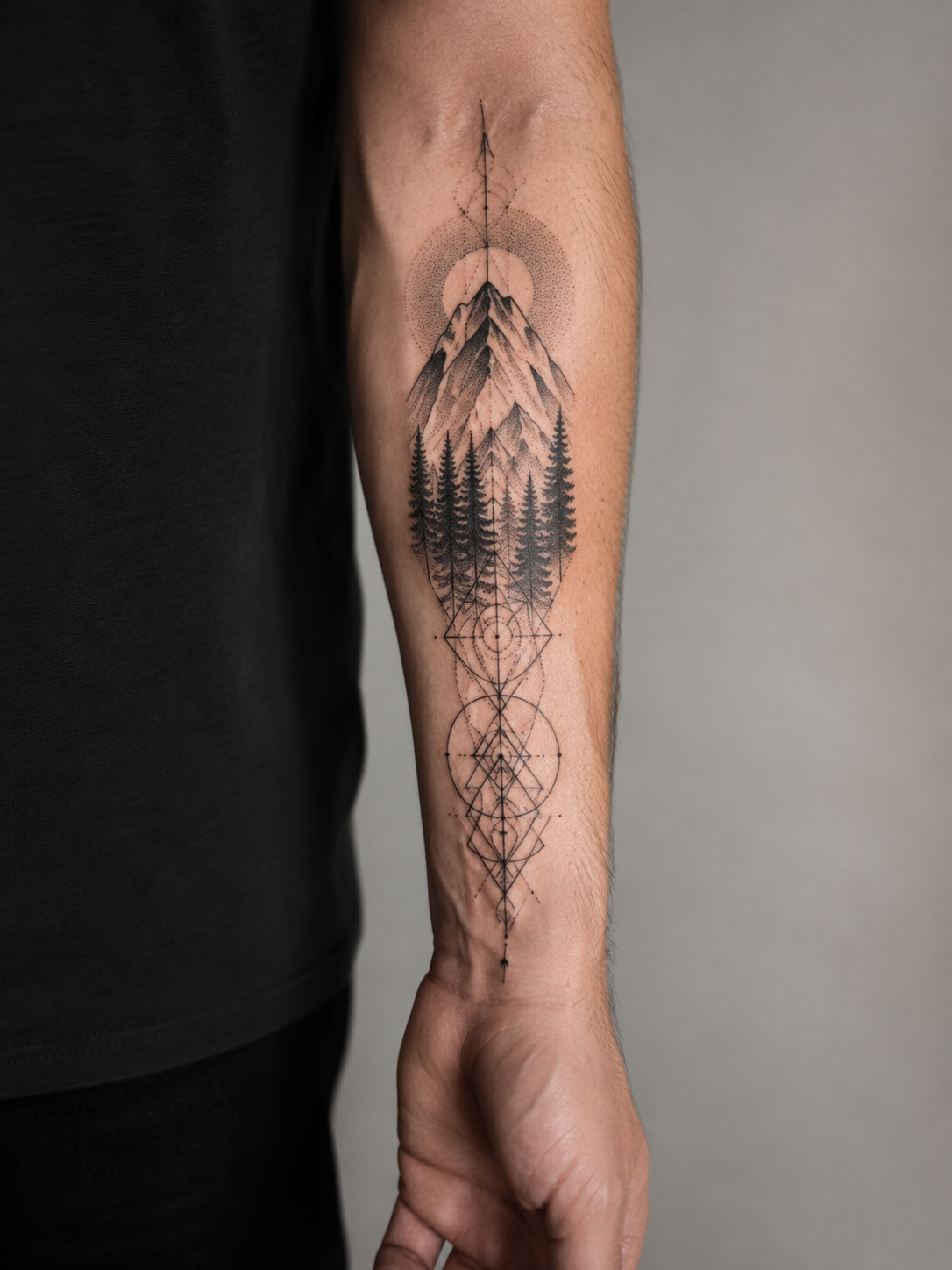
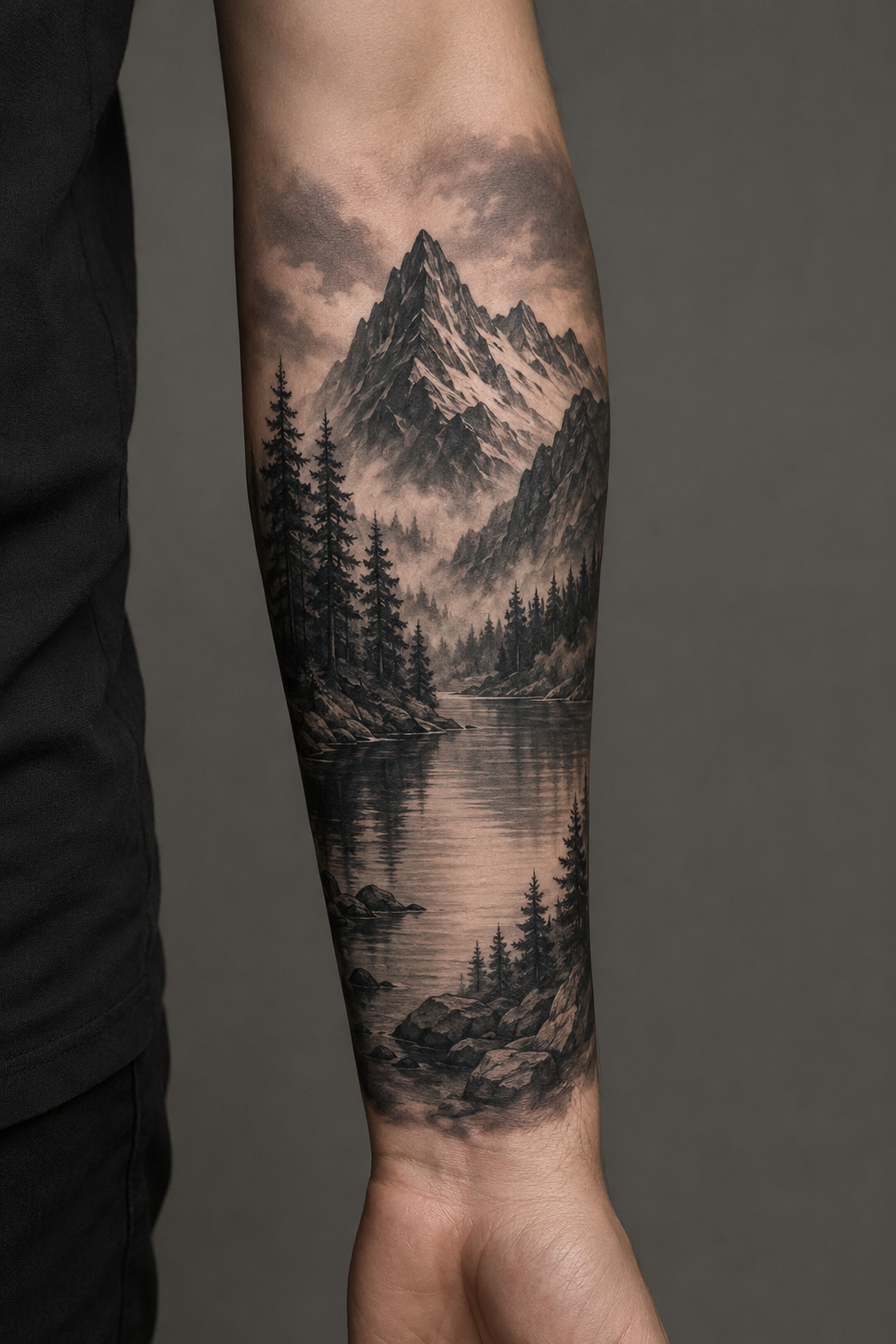
Keep the detail that makes the idea yours
A short description can capture the detail: "my dog looking alert", "my dad's handwriting", "a dragon eye that looks watchful" or "one flower from my wedding bouquet".
Then I ask which detail makes the subject easy to recognise. For an animal, it might be the eyes or a mark beside the nose. For a building, it might be the roof. For a flower, the outline of the petals may matter more than every vein in every leaf. The dragon eye forearm tattoo shows how one large feature can carry the idea without a busy background.
References can come from different places, but each picture should have one clear purpose. One can show the subject, another the amount of dark and light, and another the spacing you like. I won't copy another artist's tattoo. I use the pictures to understand your taste, then draw something for your arm.
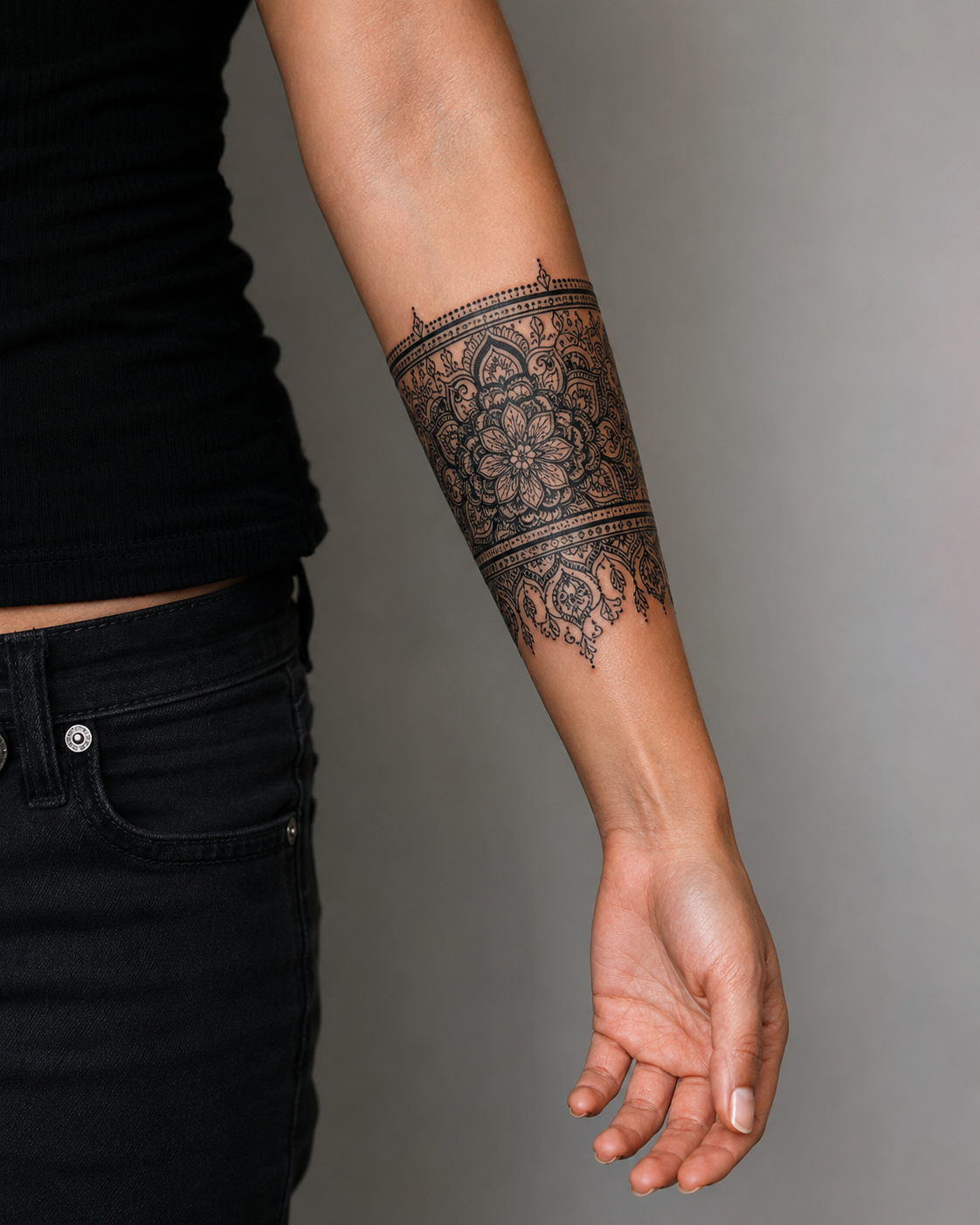
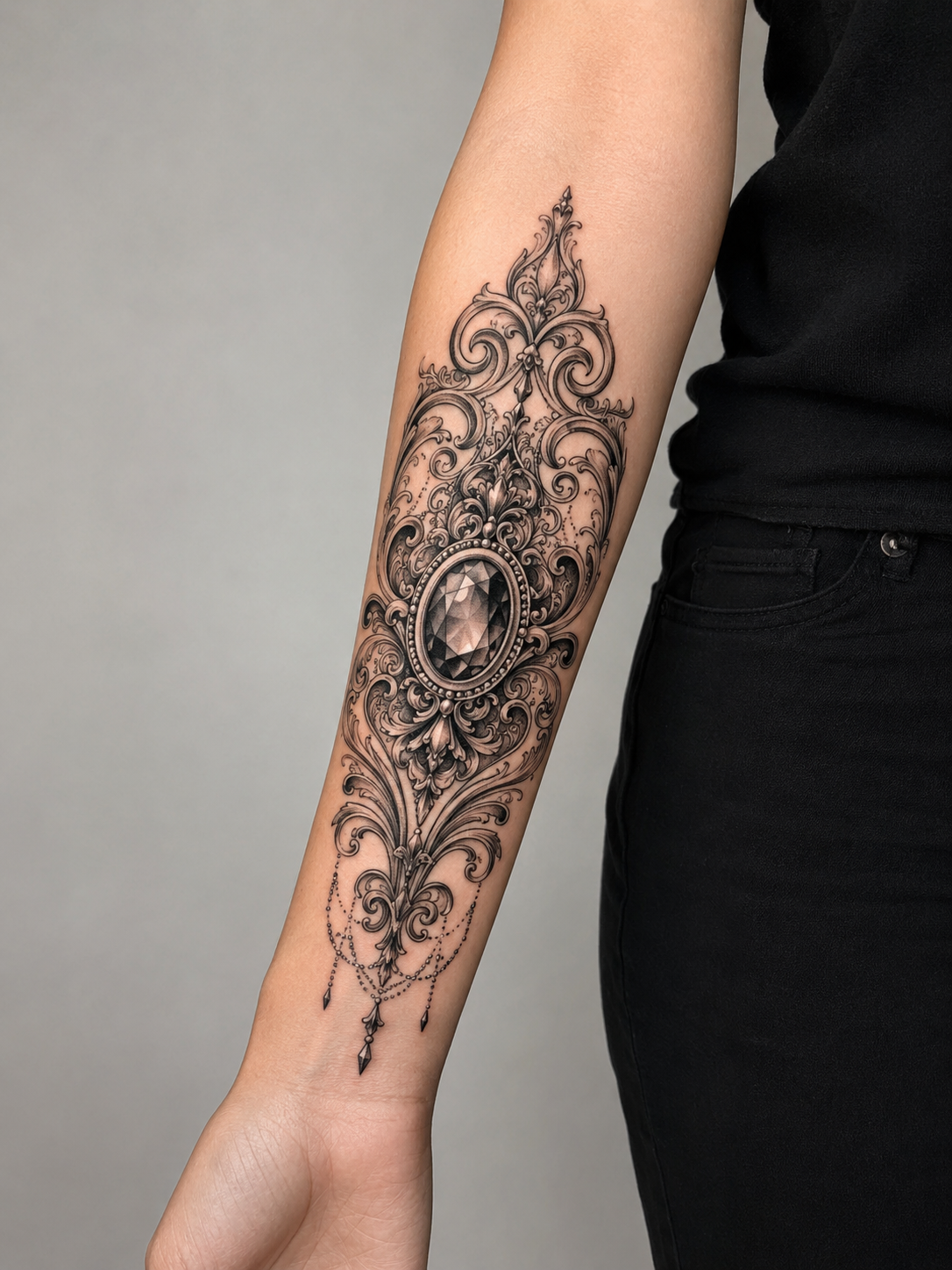
Give two subjects different jobs
Two subjects can work well together when one is the main part and the other supports it. Birth flowers can sit around real handwriting. Birds can move through leaves and flowers. Dates can stay small beside an image that already carries the personal meaning. The swallow and magnolia forearm piece shows two clear subjects sharing the same space.
Problems begin when every item must be large and full of detail. Portraits, clocks, landscapes, quotes and several symbols cannot all be the first thing you notice in one small tattoo. I choose the main subject first. Then I give the other details enough room to stay clear.
Some ideas work better as two tattoos, giving each subject more room than a combined design would allow.
Check every word before I start drawing
Lettering needs a final version. Please send the exact spelling, punctuation, capital letters and date. Do not send a rough version that you plan to correct later. If the tattoo uses somebody's handwriting, send the clearest original you can find and tell me which uneven parts you want to keep.
I can repair a broken line or open a very tight join without removing the character of the writing. That is different from changing it into a normal computer font. I'll compare my cleaned version with the original before I put it into the stencil.
Lettering also needs enough space. It can be the main subject or a small part beside an image, but I don't squeeze it into the last empty corner. The size decides how much space can stay between letters and lines. If a phrase will not stay clear at the size you want, I'll suggest fewer words or a larger tattoo.
Keep personal meaning without explaining the whole story
Memorial and family tattoos do not need to tell a full story to strangers. One familiar gesture, a flower from a garden, handwriting from a card or an everyday object can mean more than several common symbols. The clasped hands memorial tattoo is my finished-session work based on one clear gesture.
You can choose how obvious the subject should be. Some clients want people to recognise it from a distance. Others want one small detail that only they understand. Both choices work. I only need to know which one matters to you before I draw.
Search results cannot give every symbol one fixed meaning. Family, religion and culture can change what it means. Tell me where your meaning comes from if the symbol is important to you. My memorial tattoo guide covers those personal choices in more detail.
Choose a style, not a gender label
I don't call a forearm tattoo masculine or feminine. Fine Line, Blackwork, Dotwork, Realism and Ornamental are simply different ways to draw. Any of them can look soft, bold, quiet or dark. The result depends on the shapes, contrast and amount of bare skin.
Fine Line works well for open designs and careful detail when the tattoo is large enough. Blackwork uses solid dark areas and strong shapes. Dotwork can add texture or make a softer change between light and dark. Realism needs a clear reference and enough room to keep the features that make the subject recognisable.
Ornamental designs use repeated shapes and a clear balance between ink and bare skin. The baroque Ornamental forearm tattoo shows my real wraparound work. The Eye of Providence geometric piece uses geometry and texture around one central subject.
Styles can be mixed when there is a reason for each one. The Trinity knot ember tattoo has one clear symbol, dark shapes and warm colour details. Those parts work together instead of looking like separate samples.
Give detailed subjects enough room
The usable width changes between the elbow and wrist, so I set the scale from the actual forearm photograph rather than the height of an image on a phone. A strong outline can stay compact; portraits, several lines of text, detailed ornament or a scene need more room.
If an idea is too busy, I explain what I would simplify. I may remove tiny texture, open the gaps between letters, use fewer leaves or keep one symbol instead of three similar ones. I keep the part that made you choose the tattoo and simplify only the detail that gets in its way.
Cover-Up work has another limit because the old tattoo already affects the shape and dark areas. The astronaut forearm Cover-Up shows a strong new subject covering the old work. My Cover-Up consultation page explains which photos I need before I can judge what is possible.
Plan for a sleeve only if you want one
Tell me if the forearm tattoo should look complete on its own. If you may add more work later, I can leave one area clear so another tattoo can join it without making the first piece look unfinished.
Planning a full sleeve is a different job. I need to consider the whole arm and the gaps between each area. The sleeve tattoo ideas guide explains that larger plan. Your forearm tattoo doesn't have to become the start of a sleeve.
How I simplify a crowded reference
Imagine a request with a lion, compass, three dates, forest, quote and geometric background. I don't make every part smaller and hope it fits. I ask which item gives the tattoo its main meaning and which detail would still matter if the rest were removed.
The final idea might keep the lion as the main subject, one date as the personal detail and a small geometric shape around them. The compass, forest and quote can be removed, saved for another tattoo or added only if a larger size gives them enough room. This leaves one clear main subject instead of six parts fighting for attention.
I discuss these changes before I draw. I explain what I would keep, what I would simplify and why. You can disagree, change the order or choose a larger size. The consultation should leave you with a clear choice, not a list of artist terms.
How timing varies between forearm tattoos
These finished tattoos give useful timing examples. The Trinity Knot Ember and Eye of Providence each took 2 hours. The Astronaut Cover-Up took 3 hours, the Swallow and Magnolia took 3 hours 30 minutes, and the Baroque Ornamental Forearm and Clasped Hands Memorial pieces took 4 hours each. The Dragon Eye Forearm Tattoo took 7 hours over 2 sessions, and the Monk and Lotus Forearm Tattoo took 12 hours over 3 sessions.
Those times come from individual projects and are not a promise for every forearm tattoo. Size, detail, old ink and the way the design wraps around the arm can change the plan.
Send the details I need
You don't need to draw the tattoo yourself. Please include:
- the subject or exact words that must stay;
- which arm and side you prefer, with a clear photo of your forearm;
- the rough height and width in centimetres;
- two to four references, with a note about what you like in each;
- correct spelling, dates and the original handwriting;
- old tattoos, scars or skin features in the area;
- black and grey, colour or no fixed choice yet;
- whether the tattoo should stay on its own or may connect to more work later;
- anything in the references that you don't want me to use.
This information helps me find a problem before I suggest a date. I can tell you if the idea needs more room, fewer details, a different reference or a closer look at the skin in my studio. Price depends on the final size, detail, position and time. Current minimums and examples are on the tattoo pricing page.
Send the brief through booking to discuss the design.
Questions people ask before choosing a forearm tattoo
Inner or outer forearm, and what can affect comfort during the session.
Does the subject decide the inner or outer forearm?
The subject decides more than a fixed rule about inner or outer. I compare the drawing's direction, the space it needs and how the important parts sit when your arm is relaxed. Use the forearm tattoo portfolio to compare real placements.
How painful is a forearm tattoo?
Pain differs from person to person. The exact spot, session length, sleep, stress and how you feel on the day can all matter. I don't promise one pain score for everyone. The tattoo pain chart explains what can affect the session and how to prepare.
Compare your idea with completed forearm tattoos
See how the size and direction of a design change across different forearms.