
Wait until the tattooed skin has healed before swimming
Don't swim while a new tattoo is still peeling, scabbed, wet, cracked, sore or open. Many tattoos need a few weeks before the surface is ready for water, but the date on its own doesn't tell you whether the skin is ready. Healthdirect's tattoo guidance says tattoos can take weeks to heal completely and advises avoiding swimming and baths until healing is complete.
Pools, the sea, lakes, rivers, hot tubs and long baths all leave the skin soaking. Showering is different because clean water runs over the area briefly instead of leaving it soaked. Follow the dressing and washing instructions given for your tattoo, and wait longer if your artist or a medical professional has advised it.
How do you know a tattoo is ready for swimming?
Two tattoos made on the same day may not be ready for water together. Size, placement, friction, the amount of work involved and individual healing can all change the pace. Areas rubbed by socks, shoes, waistbands or tight sleeves may remain unsettled for longer.
Before returning to swimming, the skin should be fully closed and comfortable. It should have no open or wet patches, active peeling, scabs, cracks or increasing tenderness. Ordinary movement should not pull at it. Redness, warmth, swelling or pain should be settling rather than growing.
The tattoo healing stages guide explains how the appearance changes over time. The separate answer to how long a tattoo takes to heal covers the broader timeline. Neither resource can replace an individual assessment or promise that everyone is ready on the same day.
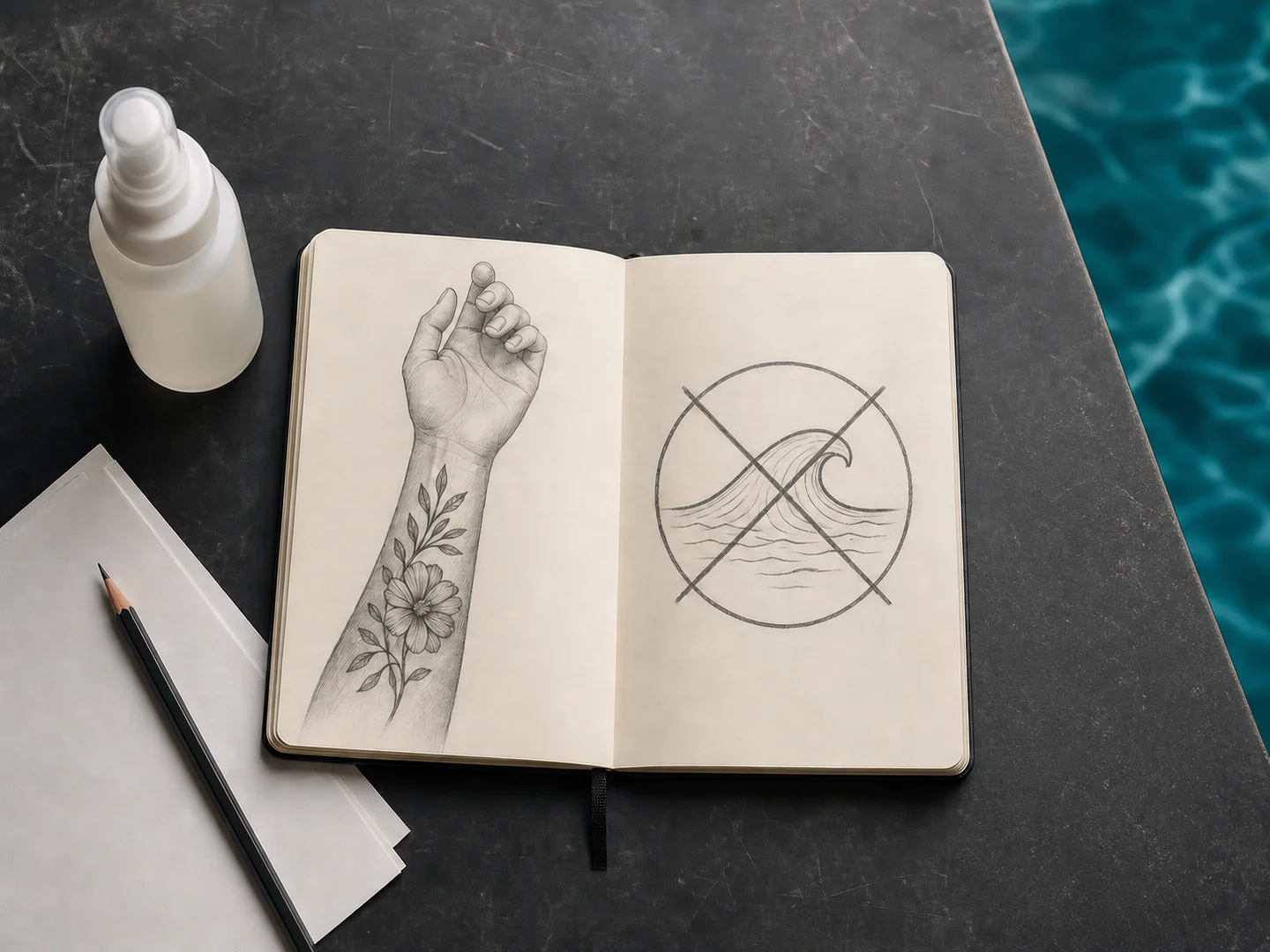
Pool, sea, lake and hot tub water all count
Chlorinated pool water doesn't make an unhealed tattoo ready for immersion. The US Centers for Disease Control and Prevention advises avoiding recreational water when you have an open wound and specifically includes a recent tattoo as an example. Its recreational-water guidance also notes that water can look clear while still containing disease-causing organisms. Wait until the tattooed skin has healed before using a pool.
Sea water doesn't override the same wait-until-healed advice. Sand, wet clothing and a wetsuit can also rub the area. Lakes and rivers may look clean without being suitable for an open wound, so they need the same caution.
Hot tubs combine prolonged immersion, warm water and a shared environment. Saunas and steam rooms add heat and heavy moisture even without a swim. The European Academy of Dermatology and Venereology aftercare leaflet advises avoiding baths, swimming and saunas until a tattoo is completely healed.
Long baths also keep the tattoo wet. Skipping the pool while soaking in a bath doesn't solve the same underlying problem. Keep water contact brief and controlled until the surface is ready.
Can you shower after a tattoo?
Short, gentle cleaning under running water is part of normal care once the instructions for the initial dressing allow it. The HSE's general wound-cleaning advice recommends running tap water followed by gentle drying. This is different from leaving tattooed skin soaking in a pool, bath or sea water.
Use the exact care instructions supplied after the appointment. Different dressings need different care. Follow the instructions for the covering I used rather than a general timetable you found online. The full routine is in the tattoo aftercare guide. Returning to immersion is a separate decision.
Keep showers brief, avoid scrubbing and do not aim a strong jet directly at the tattoo. Pat the area dry with the clean material recommended in your instructions. Normal cleaning doesn't mean that the skin is ready for a pool, bath or sea swim later that day.
Can you swim with Second Skin on a tattoo?
A clear adhesive film is not a swimming pass. The EADV tattoo-aftercare leaflet advises avoiding baths, swimming and saunas until the tattoo is completely healed; showering is fine. Follow the written instructions for the exact film used at your appointment.
Do not add cling film, tape or a random waterproof plaster to make swimming possible. Extra adhesive can pull at the surrounding skin, and a home-made cover may miss a small opening. If a film lifts, leaks or fills beyond the instructions you received, deal with the dressing according to those instructions. Ask me through contact when the question is about the dressing or normal tattoo care. Seek medical advice for symptoms that are worsening or making you feel unwell.
What if a new tattoo gets wet by accident?
Leave the water instead of extending the swim. Once you're somewhere clean, wash your hands and clean the tattoo gently according to your supplied aftercare. Pat it dry. Do not scrub, pick at the surface or cover it with a heavy layer of product in an attempt to undo the exposure.
Brief splashing is not the same as a long swim. Pay attention to how the area changes over the following days. Photographs can help you show what changed, but they cannot diagnose an infection.
Know when the question belongs with a clinician
Some redness and tenderness can occur early in normal tattoo healing. Look at the direction of change. Is the area calming down, or becoming more painful, red, swollen, warm or starting to weep? The HSE advises medical assessment when a wound becomes painful, tender, swollen or warm, or when pus appears.
Contact a GP, an out-of-hours GP or an appropriate urgent service when symptoms are increasing, spreading or accompanied by feeling unwell. I can explain the tattoo process and the care instructions I supplied, but I can't diagnose a skin problem from a message or photograph.
Plan the appointment around water when possible
Tell me before booking if swimming is part of your job, rehabilitation, competition schedule or holiday. That information can affect the sensible appointment window. It's easier to place the session after an important water event than to risk interrupting the healing period afterwards.
When you return to swimming, choose a shorter first session and avoid unnecessary rubbing from tight swimwear or equipment. Rinse off pool or sea water and dry the area gently. If the skin still feels fragile, tight or uncomfortable, stop and give it more time.


